


Every cold and flu season, clinicians face the same challenge: crowded schedules, overlapping respiratory symptoms, and pressure to provide fast answers during the initial visit. Diagnostic clarity, however, is often unavailable at the point of care when treatment decisions must be made.
Up to 50% of antibiotic prescriptions for acute respiratory infections (ARIs) in outpatient settings are unnecessary, highlighting a growing risk to patient safety and antibiotic stewardship efforts.¹ Without timely access to diagnostic tools that support real-time decision-making, clinicians are often forced to rely on symptoms alone when determining whether antibiotics are appropriate.
Outpatient and ambulatory care settings account for the majority of antibiotic prescribing in the United States, meaning even modest improvements in diagnostic accuracy at the point of care can have a meaningful impact on stewardship efforts.² When diagnostic information is delayed or unavailable during the visit, uncertainty persists—raising the likelihood of unnecessary prescribing and downstream harm.
Why Diagnostic Clarity Matters for Stewardship
Acute respiratory infections frequently present with nonspecific symptoms such as cough, fever, sore throat, and congestion. During early presentation, these symptoms do not reliably differentiate bacterial from non-bacterial illness. Without diagnostic clarity, both over- and under-prescribing become more likely.
While patient education remains an important component of stewardship, education alone cannot replace objective diagnostic data. Clinicians need tools that support confident, evidence-based decisions during the initial visit, when antibiotic prescribing decisions are made.
Systemic Factors Driving Diagnostic Uncertainty
Several systemic challenges contribute to diagnostic uncertainty in urgent care and other outpatient settings:
- Overlapping respiratory symptoms make it difficult to reliably differentiate bacterial from non-bacterial infections based on clinical assessment alone.³
- Bacterial culture testing requires 24–72 hours to return results, leaving clinicians without actionable diagnostic information during the visit when treatment decisions are made.⁴
- High patient volume in urgent care settings further constrains diagnostic evaluation. Many centers see more than 50 patients per day, with approximately one in four exceeding 60 daily visits.⁵
- Limited availability of rapid point-of-care diagnostics persists across outpatient settings, with fewer than 15% of respiratory infection evaluations supported by point-of-care testing.⁶
- Patient expectations for antibiotics remain a contributing pressure during respiratory season, even when diagnostic certainty is low.⁷
Together, these constraints create a diagnostic gap at the point of care—precisely when stewardship interventions are most effective.
How FebriDx® Supports Better Antibiotic Decisions
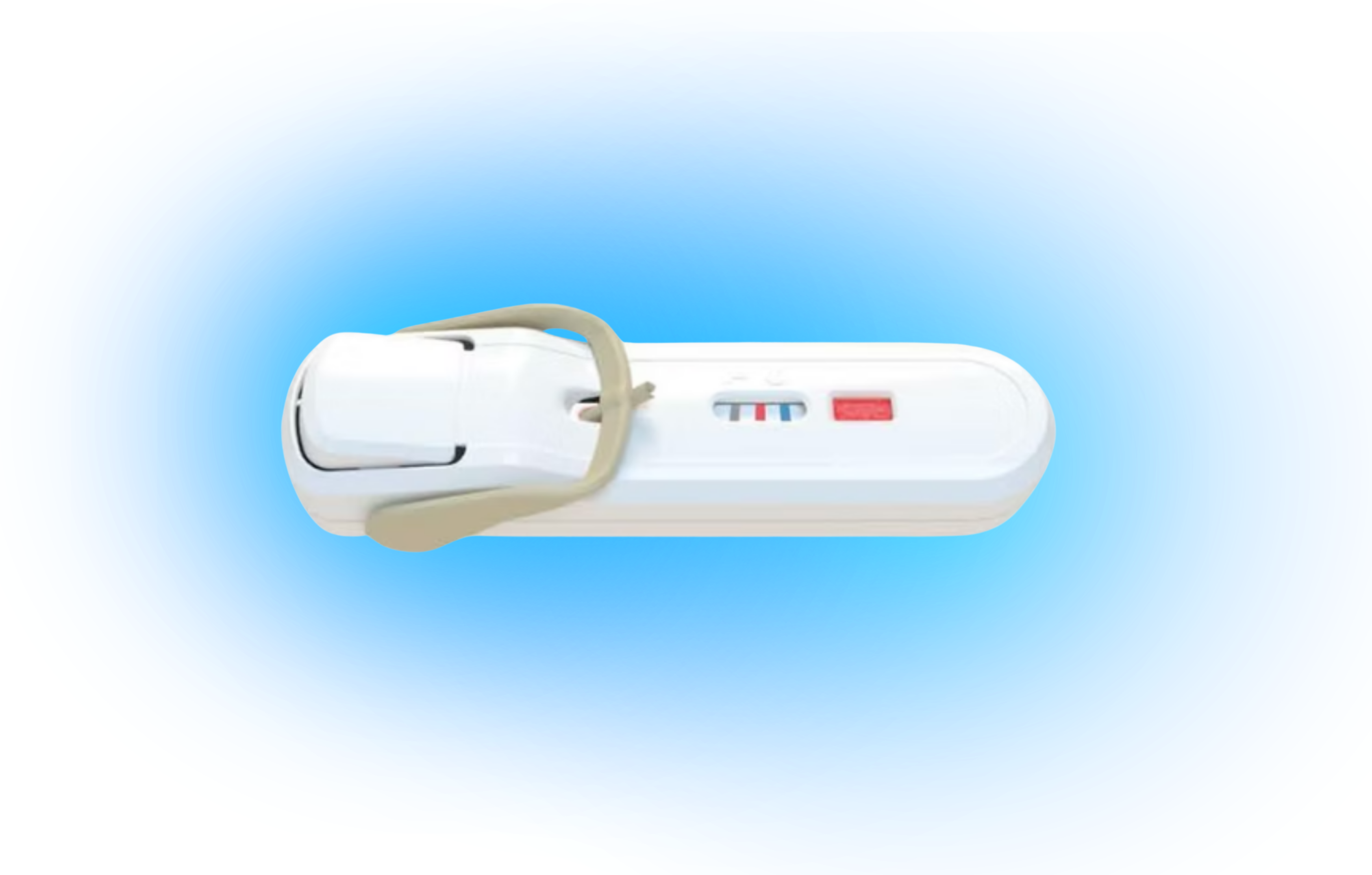
FebriDx® is a rapid point-of-care test that delivers results after 10 minutes from a fingerstick blood sample, supporting antibiotic decision-making during the initial visit, when treatment decisions are made.
By assessing the body’s host immune response rather than detecting a single pathogen, FebriDx helps clinicians differentiate bacterial infection from non-bacterial illness when respiratory symptoms overlap. This enables evidence-based decision-making in real time and reduces reliance on symptoms alone.
With a 99% negative predictive value (NPV) for ruling out bacterial infection, FebriDx provides objective data to support appropriate antibiotic stewardship while maintaining clinical confidence.¹⁰
The availability of a visual diagnostic result can also support clearer, evidence-based patient conversations during the visit, reinforcing appropriate antibiotic decision-making without delaying care.
A Practical Tool for High-Volume Outpatient Settings
FebriDx (0042U) is designed for real-world outpatient workflows:
- Reliable differentiation of bacterial and non-bacterial etiology
- 99% Negative Predictive Value to Rule out Bacterial Infections
- Results after 10 minutes from a fingerstick blood sample
- A visual tool to help providers with patient education during
- The initial visit.
- Shelf-stable for 18 months; No hazardous waste disposal required
Strengthening Stewardship This Season
To make the greatest impact this cold and flu season, healthcare organizations can focus on one key strategy:
Expanding access to rapid, point-of-care diagnostics that provide actionable clarity during the visit—when antibiotic decisions are made.
Webinar Speaker

Annie Bell
VP, Medical Affairs — Lumos Diagnostics

Dr. Brian Bobb
Senior Medical Officer — WellStreet Urgent Care